Jackie Brown: The Most Romantic Film of All Time
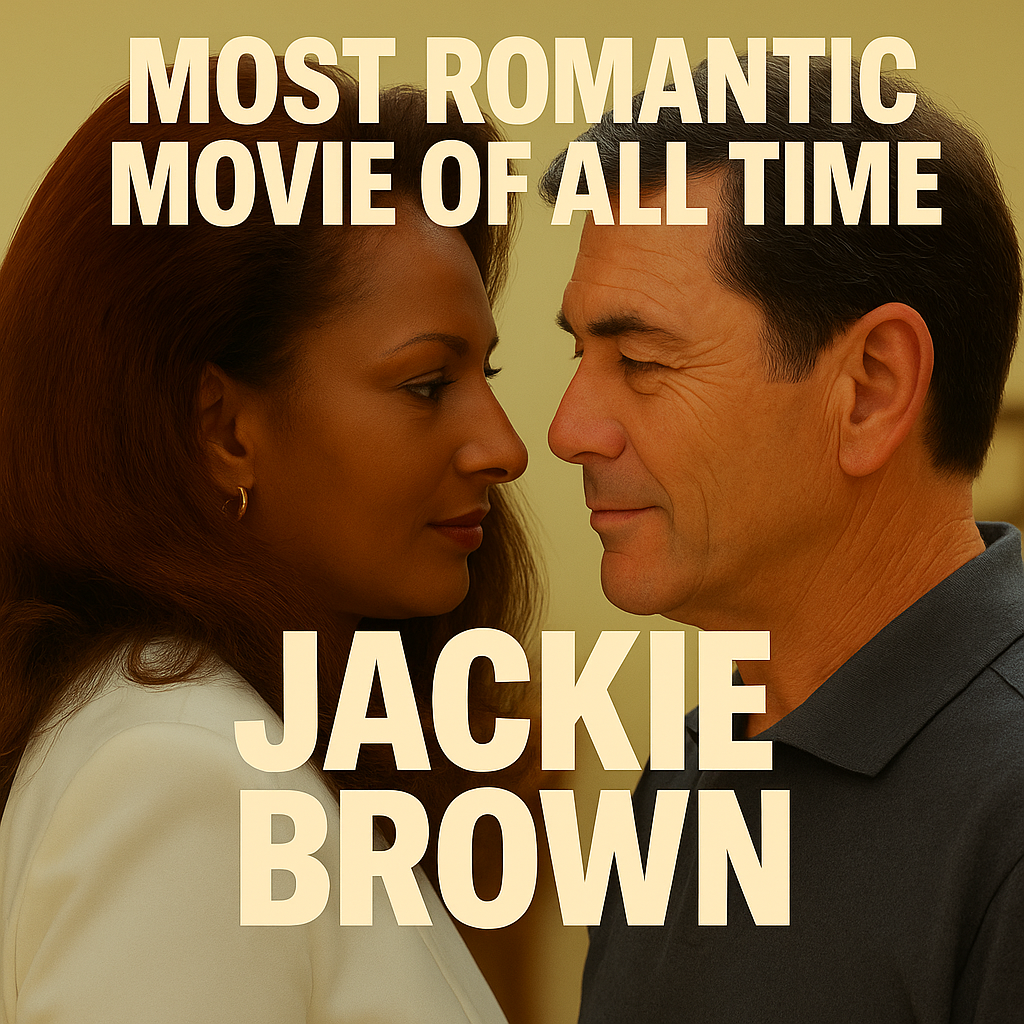
While most people remember Quentin Tarantino’s Jackie Brown for its heist plot and stellar ensemble cast, they’re missing the film’s greatest achievement: it contains the most genuinely romantic relationship ever captured on screen. The connection between Jackie Brown and Max Cherry transcends typical movie romance through its profound authenticity, emotional maturity, and the way Tarantino uses music to create an almost sacred intimacy between two people who have every reason to remain strangers.
Romance Beyond Words: The Power of Unspoken Connection
The romance in Jackie Brown begins with one of cinema’s most authentic moments of sudden attraction, perfectly orchestrated by Tarantino’s musical choices. As Max Cherry processes what should be just another routine bail bond release, The Bloodstones’ “Natural High” begins playing, and then Jackie Brown walks out of that prison. The song’s soulful groove creates the perfect emotional backdrop for what happens next; everything changes for Max in that moment.
Robert Forster’s performance captures something rarely seen on screen, the disorienting rush of unexpected attraction hitting a man who thought those feelings were behind him. The music seems to be speaking directly to Max’s experience as he watches Jackie approach. He isn’t just professionally interested in Jackie; he’s genuinely stunned by her presence, her energy, the way she carries herself despite her circumstances. “Natural High” amplifies this moment, making Max’s sudden awakening feel both surprising and inevitable. You can see it in his face as she walks toward him — this isn’t the recognition of shared dignity, it’s the lightning strike of genuine desire awakening in someone who had resigned himself to emotional numbness.
Jackie, for her part, draws on her life experience and keen ability to read people. Pam Grier brings decades of screen presence and real-world wisdom to this moment, and you can see Jackie quickly recognizing that Max is someone she can trust, a man whose attraction to her doesn’t come with hidden agendas or predatory intentions. This allows her to drop her guard in a way that’s clearly rare for her, creating an instant, electric dynamic between them that transforms every subsequent interaction.
Their relationship develops through professional interactions that gradually reveal personal vulnerabilities. Max’s growing fascination with Jackie isn’t purely romantic; it’s the recognition of someone who, like him, maintains grace under pressure. Jackie’s trust in Max similarly grows from respect rather than infatuation. This foundation makes their connection feel more real and lasting than the typical movie romance built on chemistry alone.
The Soundtrack as Emotional Architecture
The music in Jackie Brown doesn’t just accompany the romance, it creates it. Tarantino’s use of soul and R&B creates an intimate sonic environment that makes every interaction between Jackie and Max feel like it’s happening in their own private world. Bobby Womack’s “Across 110th Street” establishes the film’s soulful foundation, while tracks like The Delfonics’ “Didn’t I (Blow Your Mind This Time)” seem to give voice to emotions the characters can’t express directly.
The most romantic moment in the film might be Max listening to The Delfonics in his car, thinking about Jackie. No dialogue, no physical interaction, just a middle-aged bail bondsman discovering that someone has awakened feelings he thought were long dormant. The music makes this moment of private longing feel more intimate than most bedroom scenes in other films.
Mature Love in Cinema
What makes Jackie Brown revolutionary as a romance is that it presents love between two people who have lived full lives and carry the wisdom and wounds that come with experience. Jackie and Max aren’t young and idealistic; they’re seasoned adults who understand loss, compromise, and the rarity of genuine connection. This gives their attraction a weight and significance that transcends the typical romantic narratives we see on screen.
Their romance is built on mutual respect and understanding rather than passion or need. When Max risks everything to help Jackie with her elaborate scheme, it’s not because she’s seduced him, but because he recognizes her intelligence and sees an opportunity for both of them to transcend their circumstances. Jackie’s decision to share her plan with Max isn’t driven by romantic manipulation but by her assessment that he’s worthy of her trust.
Intimate Moments That Define True Romance
The film’s most romantically charged scene happens not during any heist, but in the quiet intimacy of Jackie’s apartment in the morning. When Max arrives to find Jackie in her natural state, no makeup, comfortable clothes, The Delfonics playing softly in the background; we witness something extraordinary. His genuine curiosity about the music, asking about the song, creates a moment of pure connection. Jackie sharing her musical taste becomes an act of letting him into her private world, while his interest shows he’s not just attracted to her surface but wants to understand what moves her soul.
The scene crackles with domestic intimacy, the kind of attraction that comes from seeing someone in their unguarded moments and finding them even more beautiful. It’s more erotic than any bedroom scene because it captures the intoxicating feeling of being welcomed into someone’s private sanctuary.
The Most Erotic Kiss in Cinema History
But the film’s masterstroke comes in that final goodbye kiss, a moment so charged with restrained passion it renders most movie sex scenes trivial by comparison. Jackie and Max both understand that circumstances won’t allow their relationship to continue, which gives their physical contact a bittersweet intensity that’s almost unbearable to watch.
When they finally touch, noses brushing, eyes locked, then that kiss; it’s the culmination of all the patient desire Max has shown and the first time Jackie allows herself to reveal her genuine romantic interest in him. The kiss feels brief to us as viewers, but you can sense that for them, time stops completely. It contains all the passion they’ve carefully controlled throughout the film, all the possibilities they’ll never explore, and all the genuine affection they’ve developed.
This is mature eroticism at its finest; the understanding that sometimes the most powerful romantic moments come not from getting what you want, but from the perfect expression of mutual desire just before you let it go.
The Most Romantic Ending in Cinema
The film’s conclusion provides the most mature and ultimately romantic ending imaginable. Jackie stops by Max’s bail bond office before leaving for Spain, asking him to come with her. His decision not to go, rooted in his understanding of his responsibilities and limitations, becomes the ultimate expression of his love for her.
Max’s refusal isn’t rejection; it’s the deepest form of care. He knows that abandoning his life to follow her would transform their connection into something desperate and needy. By staying, he preserves the integrity of what they’ve shared while acknowledging that they’ve reached the peak of their romantic connection. Jackie recognizes this wisdom immediately.
In that moment, Jackie sees Max completely clearly; a man caught up in the genuine rapture of love who wants nothing from her except to see her succeed and be happy. His willingness to let her go, even when she’s offering him everything he’s wanted, proves that his feelings are pure. There’s no manipulation, no hidden agenda, just a man who loves her enough to want what’s best for her, even if it means losing her.
This mutual recognition, that their love is real precisely because neither is trying to possess the other, creates a romantic culmination more powerful than any “riding off into the sunset” ending could achieve.
A Love Story Disguised as a Crime Film
Jackie Brown succeeds as a romance precisely because it doesn’t announce itself as one. By embedding the love story within a heist plot, Tarantino allows the relationship to develop organically, without the artificial pressure of romantic comedy conventions. The external stakes make every moment between Jackie and Max feel earned and significant.
The film suggests that the deepest romantic connections often develop not through grand romantic gestures but through the accumulation of small moments of understanding, respect, and mutual support. In a world full of crime films about masculine posturing and romantic comedies about manufactured meet-cutes, Jackie Brown offers something revolutionary: a love story between equals who recognize and appreciate each other’s full humanity.
In the end, Jackie Brown isn’t just one of the most romantic films ever made, it’s a masterclass in how real romance actually works between mature adults who have learned that love is less about finding someone to complete you and more about finding someone worthy of your respect, trust, and care. The music, performances, and Tarantino’s patient direction combine to create something truly rare: a love story that grows more beautiful with each viewing.