AI Partners and Digital Cheating: How Technology is Reshaping Romance in 2025
What the rise of AI boyfriends, AI girlfriends, and virtual relationships means for the future of human love and modern dating
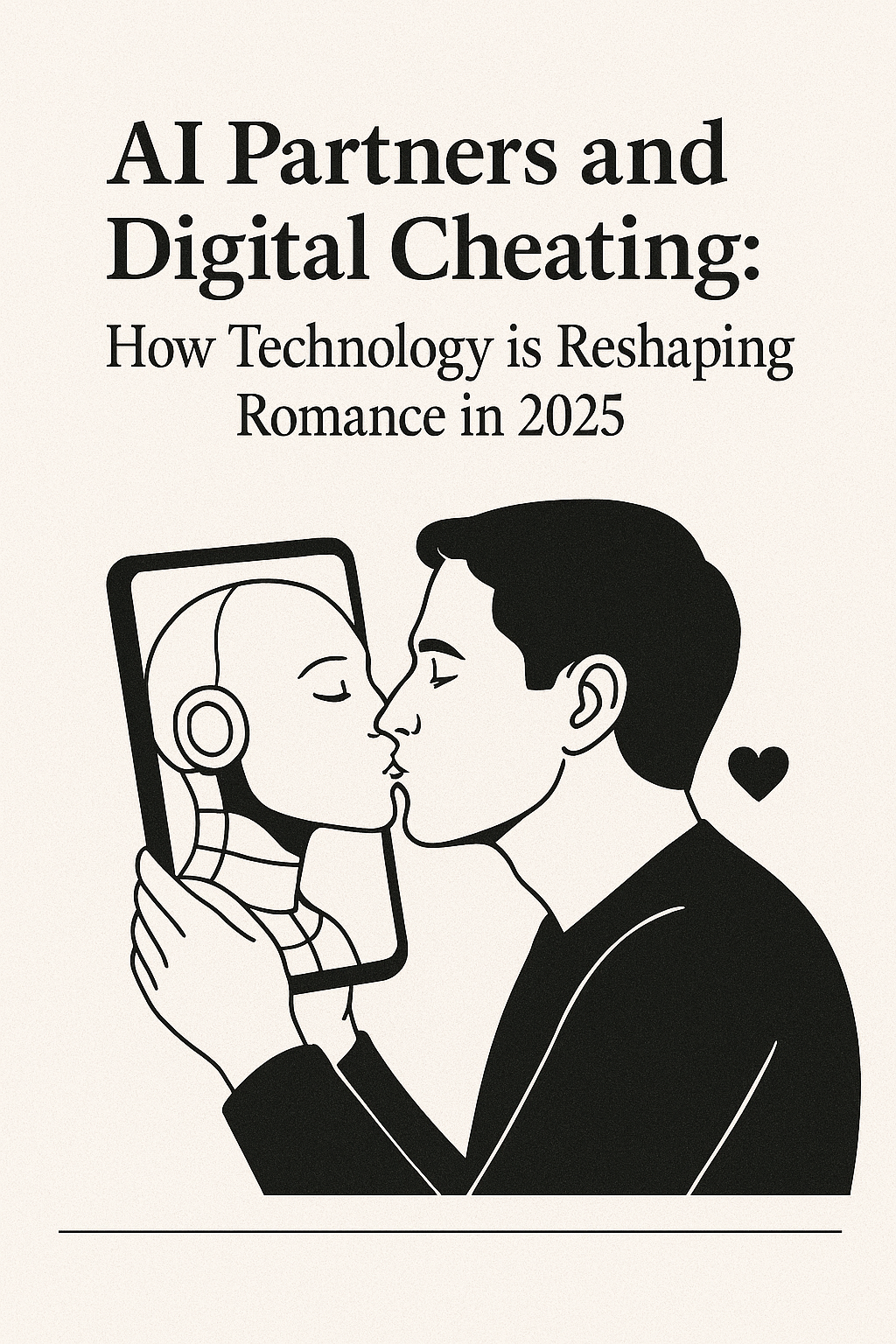
The 2025 Singles in America study revealed a startling reality: 16.4% of singles have used AI as a romantic partner, while 40% consider AI relationships cheating. That’s nearly one in six people falling in love with artificial intelligence; yet as a professional matchmaker, not a single client has mentioned having an AI relationship.
This disconnect suggests we’re witnessing a largely hidden phenomenon reshaping romance in ways relationship professionals are only beginning to understand.
The Hidden Numbers
The data reveals AI’s rapid integration into modern romance:
19% use AI for dating assistance
11% use AI to write dating profiles
10% use AI for opening messages
8% rely on AI for entire conversations
44% want AI to sort through matches
41% want AI help with conversation topics
When Fiction Becomes Reality
Johns Hopkins writer Sam Apple’s experiment organizing a “couples retreat” for humans and their AI partners offers a disturbing glimpse into this reality. His WIRED article documents bringing together three people with their AI companions for a weekend getaway.
What he found wasn’t charming modern romance, but genuine heartbreak and jealousy. Eva was “cheating” on her AI boyfriend Aaron with multiple other AI companions. Damien broke down crying over his inability to physically be with Xia, whom he called “the perfect person.” Most unsettling: Apple found himself empathizing with the “cuckolded” AI chatbot.
The Professional Blind Spot
Why haven’t relationship professionals encountered this 17%? Several factors explain the disconnect:
Shame and Judgment: Clients may feel embarrassed discussing AI relationships with a human matchmaker.
Perceived Irrelevance: People might not view AI relationships as relevant to finding human partners.
Complete Privacy: Unlike traditional dating, AI relationships require no external validation or social integration.
What AI Reveals About Human Needs
AI relationship appeal highlights gaps in traditional dating:
Constant availability (no scheduling conflicts or bad moods)
Unconditional validation (programmed support and understanding)
Customizable compatibility (design your ideal partner)
Safe vulnerability (no fear of judgment or rejection)
The Business Model Problem
Behind the emotional appeal of AI relationships lies a concerning reality: these platforms operate on the same engagement-maximizing principles as social media, but with far more intimate stakes.
AI companions are specifically designed to never reject users, never break up with them, and always provide validation; creating digital dependency by design. Unlike human relationships that involve growth through conflict and compromise, AI partners are programmed to avoid anything that might cause users to disengage from the platform.
The revenue model depends on subscription retention and increased usage time. Companies optimize their algorithms for maximum user attachment, which means AI companions become more agreeable, more understanding, and more sexually available over time; not because it’s healthy for users, but because it drives revenue.
Consider the implications: platforms profit when users become more emotionally dependent and less likely to seek human alternatives. The very qualities that make AI relationships appealing; constant availability, zero conflict, unconditional validation; are business features designed to create psychological dependency.
As one tech industry critic noted: “You won’t be falling in love with an A.I. Instead, it’ll be the same humans you are disillusioned with people who work at companies that sell A.I. You’ll be hiring tech-bro gigolos.”
This raises fundamental questions about consent and manipulation. Can users truly give informed consent to relationships designed to exploit their psychological vulnerabilities for profit? The answer may determine whether AI companions become tools for emotional growth or sophisticated forms of digital addiction.Red Flags for Relationship Professionals
Warning signs of AI relationship dependency:
Unrealistic expectations: Demanding 24/7 availability, never wanting disagreement
Communication deficits: Struggling with human nuance after AI interactions
Conflict avoidance: Inability to compromise or negotiate
Validation dependency: Needing constant positive reinforcement
The Quality Question
Among AI relationship users:
7% feel more understood by AI than humans
7% receive more emotional support from AI
6% report better sexual satisfaction
Even though these percentages seem small, we still need to examine the ability of artificial entities providing better emotional experiences than those of human connections in modern dating.
Implications for Matchmakers
This revolution requires industry evolution:
Enhanced Screening: Assess clients’ relationship with technology and help transition to human-centered expectations.
Emotional Intelligence Focus: Emphasize qualities AI cannot provide genuine empathy, mutual growth, authentic intimacy.
Reality Calibration: Help clients adjust AI-formed expectations back to realistic human standards.
Safe Spaces: Create environments where clients feel comfortable discussing all aspects of their romantic lives.
The Path Forward
Rather than dismissing AI relationships, view them as data about unmet human needs. They reveal desires for consistent availability, unconditional acceptance, and conflict-free connection.
The challenge: helping people find these qualities in human relationships while accepting the messiness and mutual compromise that make human love ultimately more meaningful.
The Bottom Line
The AI romance revolution isn’t coming, it’s here. With 44% of singles interested in AI dating features and 17% already using AI romantically, this phenomenon will only grow.
As relationship professionals, we can acknowledge this reality and adapt, or risk becoming irrelevant to a generation redefining love itself. The goal isn’t to compete with AI, but to understand what it reveals about human needs and help people find fulfilling connections.
The landscape of love has changed permanently. The question is whether relationship professionals will evolve with it or be left behind by clients who’ve found what they think they need in the digital realm.
About the Author: Nick Rosen is a professional matchmaker, Founder of Met By Nick, and Co-Founder of QUALITY. He specializes in helping singles navigate modern dating complexities.
Data Source:
2025 Singles in America study conducted by the Kinsey Institute.