Louis Theroux Delivered With Inside the Manosphere
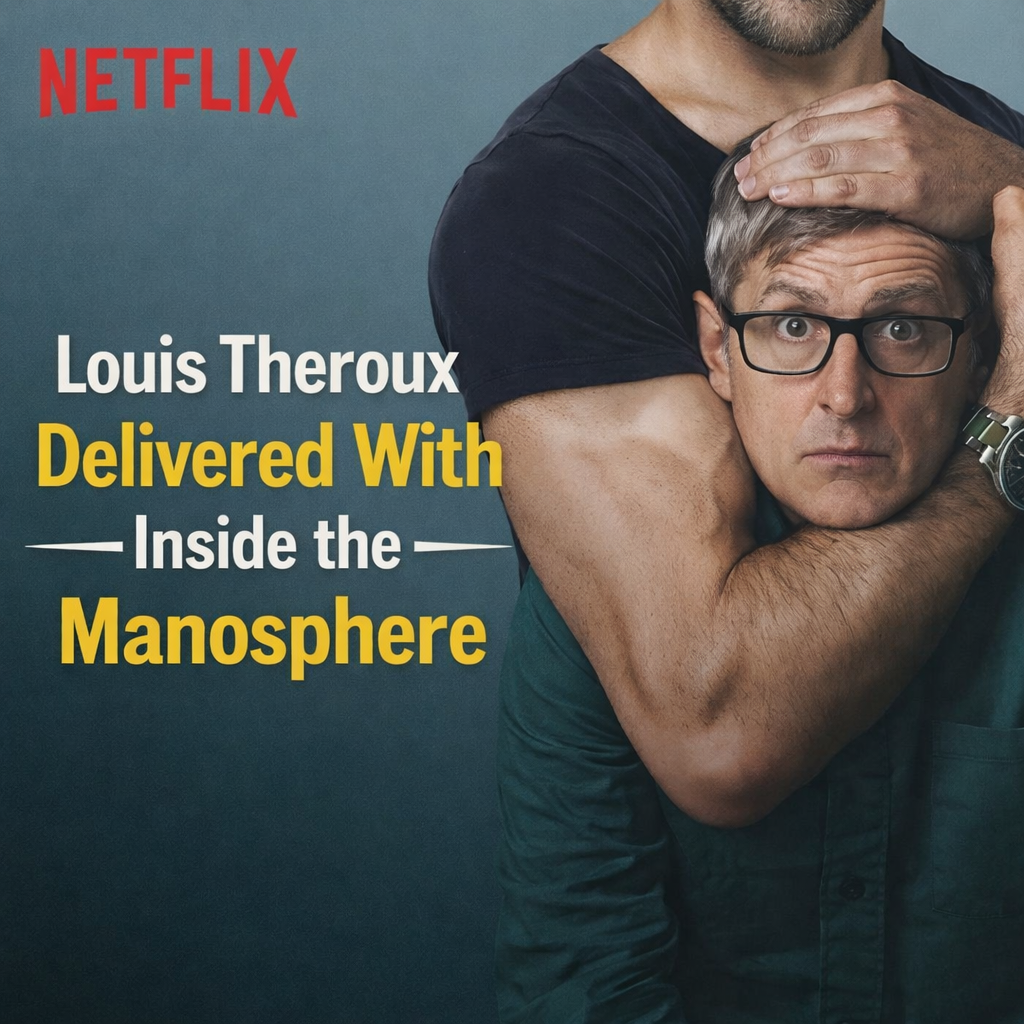
Louis Theroux’s Inside the Manosphere on Netflix
Part 1
I’m a matchmaker. I spend my days talking to men and women about why connection feels so impossibly hard right now. Both sides are vocal about how exhausted and frustrated they are and from where I sit, the rate and availability of genuine companionship is in a genuinely troubled place. The gap between what people want and what they’re actually able to find is widening, and it’s not abstract to me. I see it in every consultation.
So when I sat down to watch Louis Theroux’s Inside the Manosphere on Netflix, I wasn’t watching as a detached observer. I was watching as someone who deals with the wreckage of these gender dynamics in real time, someone who hears both sides of this fracture every single week.
I went in braced for disappointment. People who’d already seen it warned me it didn’t go deep enough, that it was surface-level coverage of content creators I already find repulsive, wrapped in the kind of tepid documentary packaging Netflix has become known for. I set my expectations accordingly. I was wrong to be so skeptical.
The documentary is genuinely compelling. More than that, it educated me on things I didn’t expect to learn, not just about the manosphere itself, but about the mechanics of modern content creation, the architecture of male devotion, and the very real grievances that sit underneath all the noise.
The Mirror Maze of Content Creation
One of the most fascinating things Theroux captured, almost accidentally, is what it actually looks like to be a manosphere content creator in full operation. These guys have camera crews of their own following them around while simultaneously managing live streams on their phones, responding to audience comments in real time, feeding the machine while being filmed for someone else’s machine. It’s organized chaos. A maze of mirrors.
What struck me is how disorienting this must have been for Theroux and his team. Documentary filmmaking is a controlled format. You control the camera. You control the edit. You control the narrative, at least in post. What Theroux walked into was a media operation that had no interest in ceding that control, because these creators are their own editors, their own distributors, their own PR departments.
And the moment Theroux arrived on set, he became content. That’s not a metaphor. Clips of their interviews, heated exchanges, moments of friction; all of it was immediately being spliced and packaged for the creator’s own audience before Theroux’s footage even made it to a hard drive. He acknowledges his discomfort with this openly, and honestly, good for him for including it. Because it reveals something true: both sides came in knowing this wasn’t neutral territory. Theroux’s team was making a documentary about people they find problematic. The creators knew it. So they filmed back.
I actually respect the documentary for showing this media standoff so transparently, because it gets at a real tension most coverage of the manosphere refuses to acknowledge: yes, these men and the content they create are deeply problematic in many ways and also, they are not entirely paranoid for assuming any mainstream documentary about them is going to be a hit piece. That’s just accurate. The battle between traditional media control and creator-driven content made the film more honest, not less.
The Devotion of Men Who Feel Unclaimed
The fan behavior on display is what most people fixate on; men traveling hundreds of miles to stand near a content creator they’ve never met, who probably doesn’t know their names. On the surface it reads as cult-adjacent, and in some ways it is.
But if you grew up as a man, or grew up around men, you recognize something underneath the spectacle. Pack mentality is real. The pull toward an idealized alpha, someone who seems to have figured out how to live on his own terms, is not irrational. It’s baked into how men are socialized to orient themselves. What’s changed is where those figures live now. They live on TikTok and X and Instagram, talking directly to lonely men at 2am.
These creators are, whatever else you want to say about them, accessible. They engage with their audiences. They name a feeling that a lot of men carry privately: that no one is in their corner, that their value is defined entirely by what they produce, that the institutions they were promised would reward them have largely failed to do so. They’re not wrong that these men feel that way. They’re often deeply wrong about the solutions they offer, but diagnosing a real wound and offering a bad cure is still more effective than pretending the wound doesn’t exist.
As a matchmaker, I see this wound constantly. Men come to me carrying a quiet but profound sense that they’ve been left behind; not just romantically, but culturally. They don’t have language for it, and most of the public conversation about men has made it harder, not easier, for them to articulate what they’re actually feeling.
What’s missing on the political left, and this documentary made it impossible to ignore, is any credible equivalent. The left has done necessary and important work critiquing patriarchy and toxic masculinity and in doing so has left an entire generation of men feeling not reformed but personally indicted. Not “here’s a better model of manhood” but “manhood itself is the problem.” That vacuum doesn’t stay empty. The manosphere walked right into it.
The Matrix Wasn’t Wrong About Everything
The red pill metaphor these creators lean on is cheap and self-aggrandizing. But the feeling underneath it, that the institutions of society are not actually designed to protect ordinary people, is not delusional. It’s increasingly well-documented.
Colleges and universities have spent decades promising upward mobility and delivering debt. Stable, dignified work is harder to come by. Corporate America is openly corrupt in ways that used to at least require some discretion. And then there are the Epstein files; the confirmation that people who shaped policy, influenced culture, and told the rest of us how to live were closely associated with a man who was sex-trafficking minors for years, with apparent impunity. That’s not conspiracy theory. That happened. The paranoia has receipts.
So when manosphere creators tell their audiences that the system is rigged against them, they’re mixing genuine institutional critique with a lot of bad-faith scapegoating. But the grain of truth is large enough that millions of men find the whole package persuasive. Dismissing that entirely is how we got here in the first place.